There has been a lot of talk since 1998 as to whether vaccines cause autism. Though I have been loath to enter this conversation, it has become apparent that perhaps I should speak in order to provide a helpful, even fresh perspective. Here is our family’s story.
 In 1987, my youngest sister was born, the youngest of four, of whom I am the eldest. Her siblings and I had been in good health all our lives, having received routine immunizations, and having borne a typical number of upper respiratory and gastrointestinal infections. Having had three children, my mother noticed early on some unusual things about my sister. The typical developmental milestones of engaging with eye contact, smiling, rolling over, cooing, and sitting up seemed delayed, so my mother brought this to the attention of our pediatrician. But my mother knew that these delayed milestones were only the progression of something that she had perceived from the time that my sister was born—my sister was different from my mother’s older children.
Through several years of visits with specialists and other physicians, a diagnosis was lacking. Hindsight is 20/20, but watching a child’s development in real time and finding the correct diagnosis is often quite challenging. As my sister grew, additional developmental milestones of speech, motor ability, eye contact and social interaction were all delayed. She could not process new information or stressful environments without tantrums. She developed repetitive behaviors and speech, and it gradually became clear to her family and to her physicians that her primary problem was related to an emerging set of diagnoses called the autism spectrum disorders.
In the years that have passed since those days, my sister has grown into a lovely woman whose functional ability greatly exceeded the expectations of those who prognosticate, but this only serves as a caution against prognostication. With the support of our wonderful hometown community, my sister is able to thrive, to work, and to lead a life that makes her feel happy and fulfilled. She still has autism.
All credit for her current state in life goes to the hard work of my sister and my mother, and to a variety of loving people and physicians whose wisdom and prayers for her success exceeded their knowledge on how to treat and manage such a condition. She was taught motor skills through hours of therapeutic play and physical therapy, immersed in stressful situations until they no longer became stressful, engaged in constant dialogue to learn word skills. She was truly understood by my mother, who analyzed each subsequent step of development and how it should happen by watching her older children. She then constantly dreamed and schemed new ways to teach normal development to a child for whom nothing was intuitive due to an essential social learning disconnect and who was overwhelmed by what was important and what was not important to learn.
I understand all of these things now, both through the lens of having lived in the same family, and also through another perspective, which came later.
During the period of time that Dr. Andrew Wakefield was publishing his now discredited study on MMR vaccine and possible links to autism, I was in high school and didn’t hear about it. When I was in college and medical school training, however, it was becoming a big topic of discussion, and has remained so ever since.
I confess that the first time that I heard about this possible link, I dropped everything I was doing and spent hours reading about the topic, determined to understand the debate, wondering how it applied to our family and to my sister, willing to believe if the evidence was there. I spent weeks of my life thinking about this particular problem, reading literature on autism, vaccination, and public health.
I subsequently finished medical school and public health training at the University of Alabama in Birmingham, lived overseas in Tanzania for a year doing research on HIV, infectious diseases and nutrition, did residency at Yale University in internal medicine and pediatrics, and am now studying allergy and immunology at Vanderbilt University. Those years of study—of medicine, of immunology, of pediatrics—have led me to three conclusions:
- Vaccines do not cause autism. The literature on the subject of vaccines and autism is robust, with study after study showing no link between those who have autism and whether or not they got vaccinated (Jain et al., 2015; Uno, Uchiyama, Kurosawa, Aleksic, & Ozaki, 2015). Indeed, even in families like mine, where some children are affected with autism and some children are not, kids who got vaccinated were no more likely to have autism than those who did not. The rates were the same. Vaccines are very safe and meet the goal of providing protection against disease, with rare adverse events (Maglione et al., 2014). They are certainly safer than being unvaccinated, by a long shot.
- I do vaccinate all of my pediatric patients, on the regular immunization schedule, both in my previous practice as a pediatrician and now as a physician who is specializing in allergies and in immunity against diseases.
- Having lived in enough places in the world and worked in and out of enough hospitals, I have seen the consequences of almost every vaccine-preventable illness. They occurred mostly in patients who were unable to access vaccines due to poverty or remoteness, who were unable to receive them due to immune deficiency, or who were unwilling to receive them out of fear.
I have seen a child die in Tanzania, flexing in the rigorous agony of tetanus.
I have seen a child suffer severe harm in the United States from a neck abscess and orbital abscesses caused by a bacteria called Hemophilus influenzae type b (Hib).
I have seen the swollen, tender glands resulting from a mumps outbreak in an orphanage and worried for all of the children about the consequences of pancreatitis, sterility, and encephalitis.
I have seen numerous older patients who died from influenza, and infants who were intubated in the ICU from its ravages.
I have seen patients die from pneumonia or meningitis caused by another bacteria called Streptococcus pneumoniae, despite full-press antibiotic therapy.
I have seen the dehydration of Rotavirus and have monitored IV drips for weary infants and their mothers.
I have seen severely sickened children and adults with the hacking, rib-breaking cough of pertussis.
I have seen children and adults, jaundiced with liver failure related to hepatitis B, some of whom go on to develop malignant liver cancer.
I have seen the limps and the dead limbs of polio.
I have seen women from every corner of the globe who were dying from cervical cancer related to HPV infection.
I have seen varicella kill an infant with a weak immune system, and lead to severe pneumonias in children with good immune systems.
It is not a collection of memories that I treasure, and in every one of these cases, I wept. Were it not for the sake of all of our children, mine and yours, I would keep these stories to myself, but we all need to know about these diseases so that we won’t forget. They are not far away. They are at our doorstep, and they are waiting for us to give up vigilance and allow them in again.
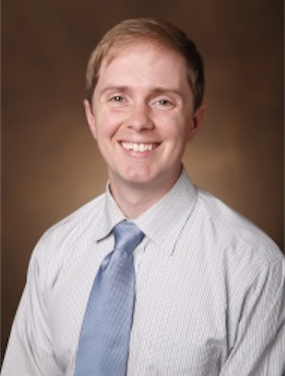
Dr. Cosby Stone, Jr. is brother to a sister living with an autism spectrum disorder. He is also a published poet and a physician specializing in allergies and immunology, with research experience in vaccine safety, nutrition, public health, and the prevention of allergies and asthma.
References:
Dubé, E., Laberge, C., Guay, M., Bramadat, P., Roy, R., & Bettinger, J. (2013). Vaccine Hesitancy. Hum Vaccin Immunother, 9(8), 1763-1773.
Hardt, K., Schmidt-Ott, R., Glismann, S., Adegbola, R., & Meurice, F. (2013). Sustaining vaccine confidence in the 21st Century. Vaccines, 3, 204-224.
Jain, A., Marshall, J., Buikema, A., Bancroft, T., Kelly, J., & Newschaffer, C. (2015). Autism occurrence by MMR vaccine status among US children with older siblings with and without autism. . JAMA, 313(15), 1534-1540.
Maglione, M., Das, L., Raaen, L., Smith, A., Chari, R., Newberry, S., . . . Gidengil, C. (2014). Safety of vaccines used for routine immunization of U.S. children: a systematic review. Pediatrics, 134(2), 325-327.
Muhle, R., Trentacoste, S., & Rapin, I. (2004). The genetics of autism. Pediatrics, 113(5), e472-486.
Uno, Y., Uchiyama, T., Kurosawa, M., Aleksic, B., & Ozaki, N. (2015). Early exposure to the combined measles-mumps-rubella vaccine and thimerosal-containing vaccines and autism spectrum disorder. Vaccine, 33(21), 2511-2516.
Ziats, M., Edmonson, C., & Rennert, O. (2015). The autistic brain in the context of normal neurodevelopment. Front Neuroanat, 9(115), published online.